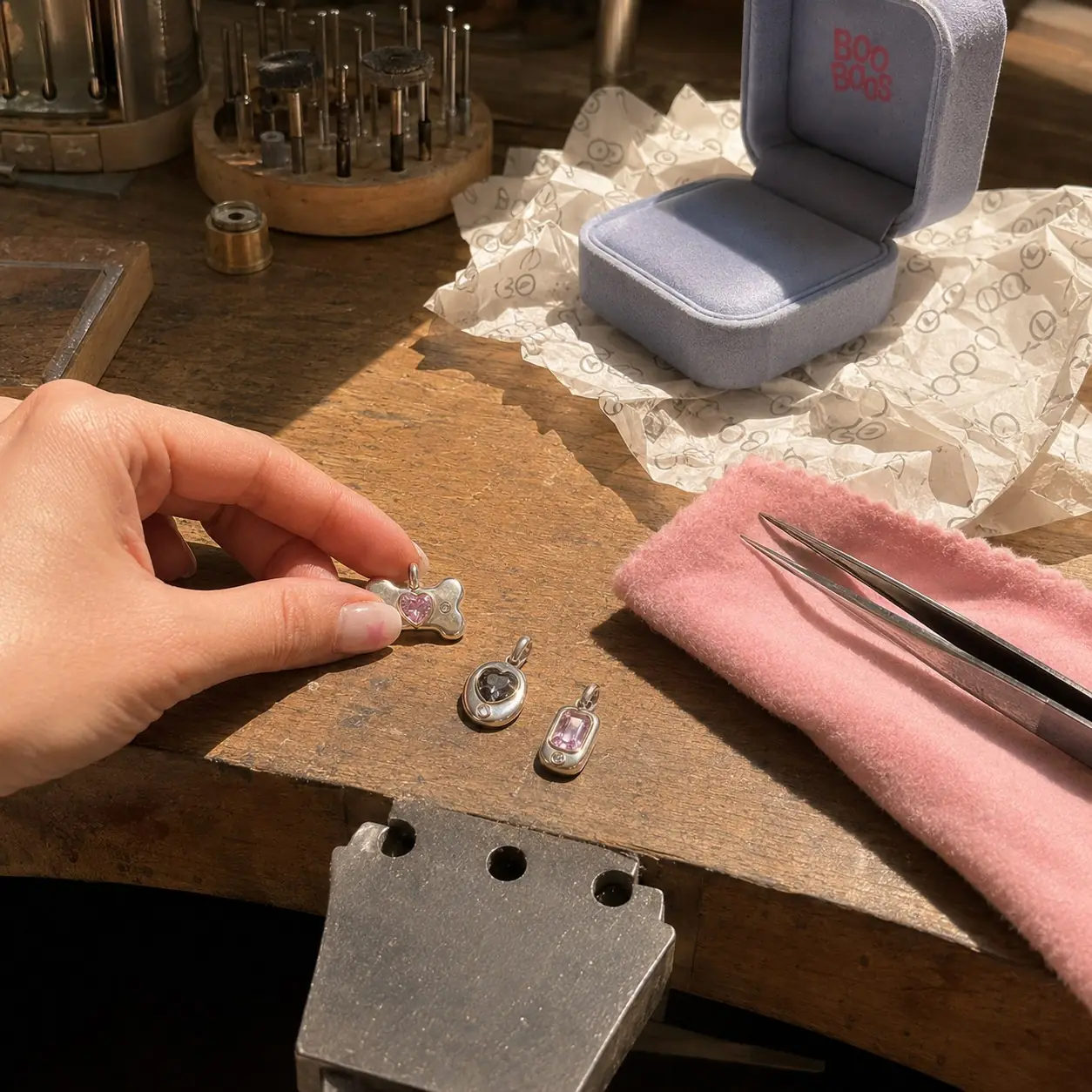
Stone chosen
You pick the colour. The seat is then cut for the stone that is actually going in, not to a standard size, because no two cut stones are quite identical.
Every seat cut to the stone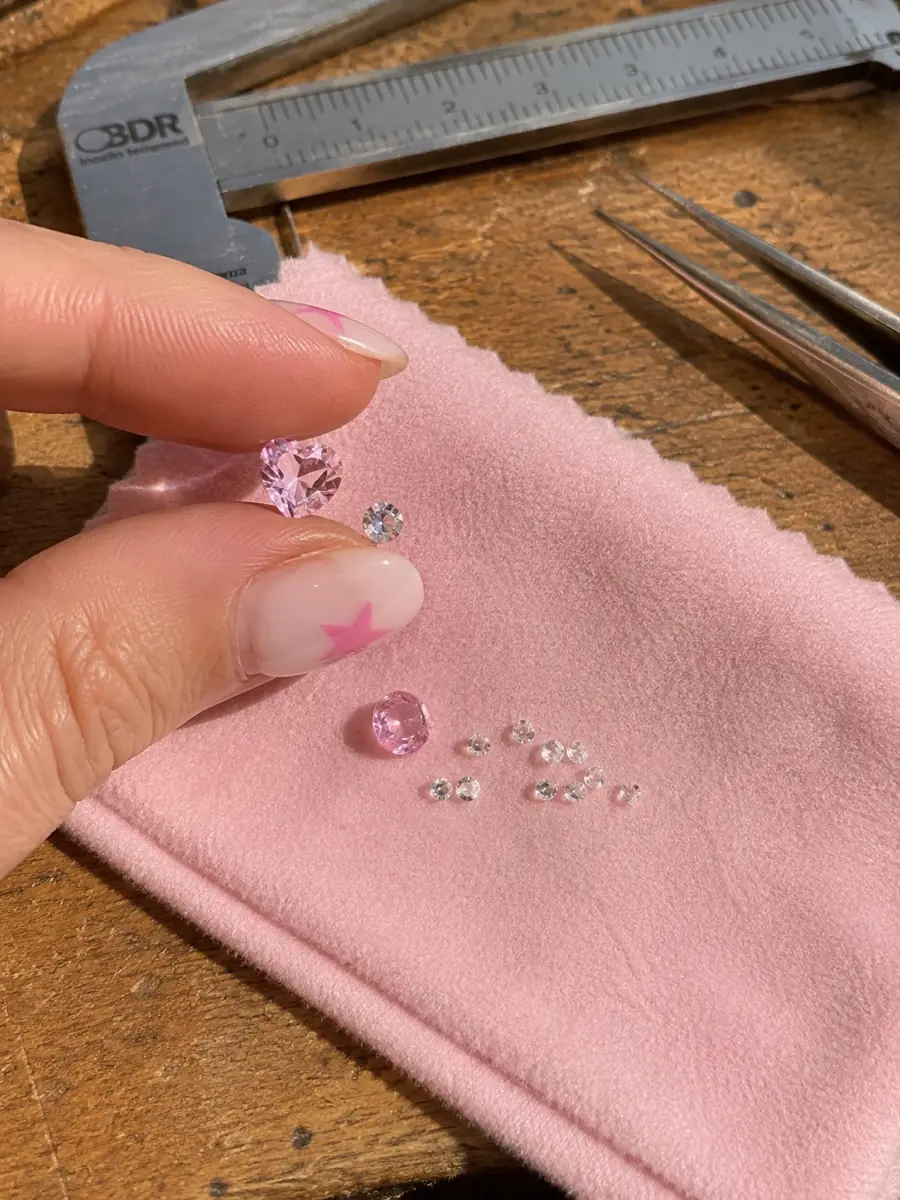
Six steps, one bench, about two weeks. Nothing here is done by a machine that a hand could do better.
You pick the colour. The seat is then cut for the stone that is actually going in, not to a standard size, because no two cut stones are quite identical.
Every seat cut to the stone
The stone drops into a wall of metal and the wall is pushed over its edge with a burnisher. That is what holds it in — no adhesive anywhere in the piece, so there is nothing that can come unstuck.
Bezel-set, never glued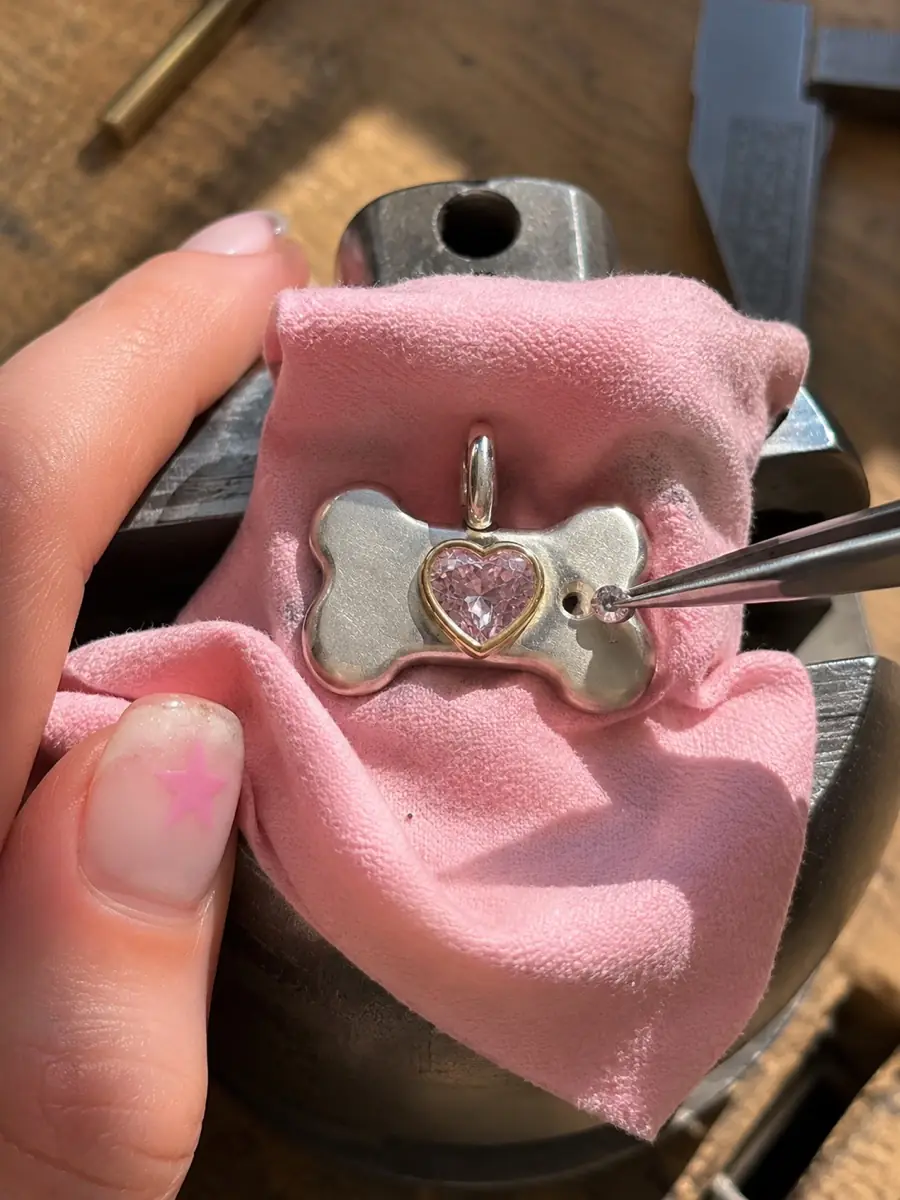
A charm made for a person is too heavy and too tall for a collar. Ours are filed flat and kept light, so a breakaway collar still breaks away and there is nothing standing up to catch on a blanket.
Flat, light, nothing sticking up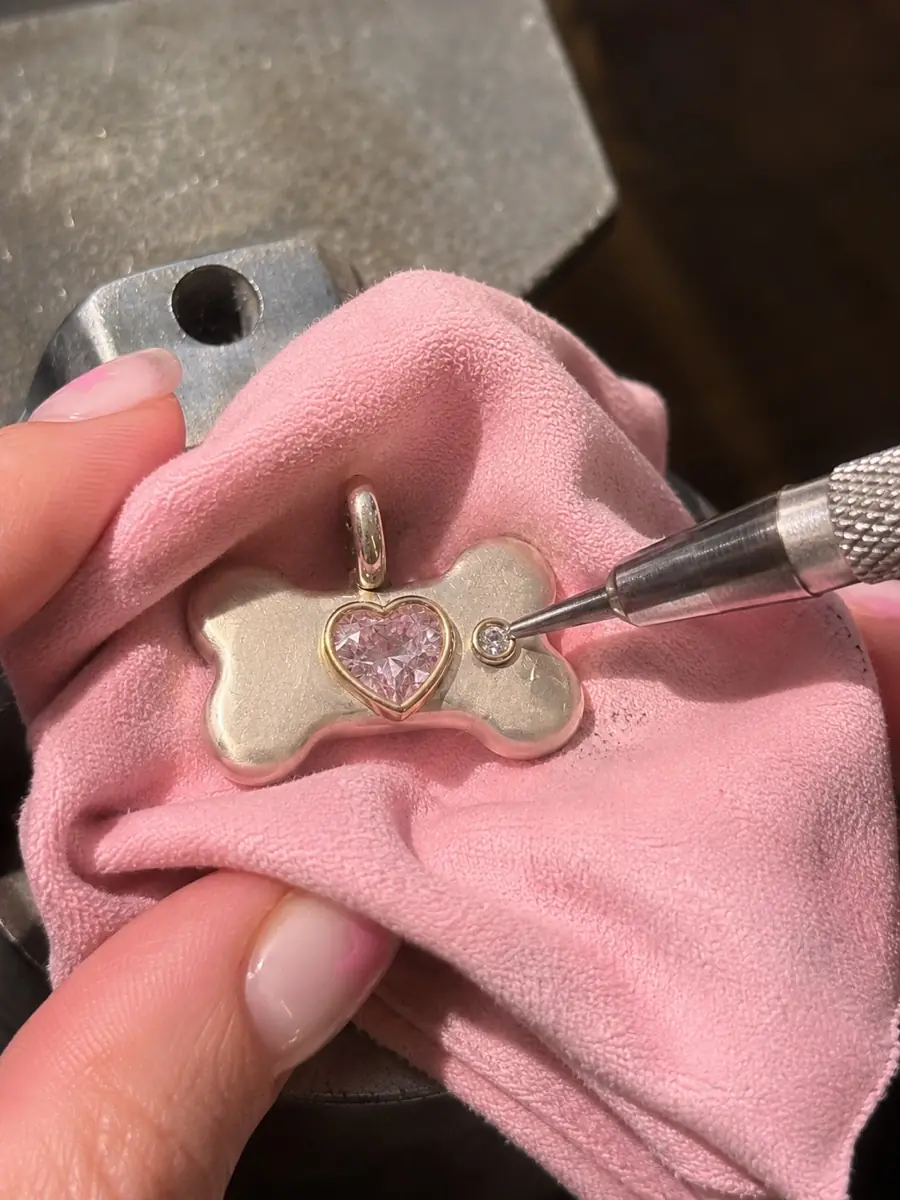
Every edge is rounded off by hand and the face is brought to a mirror. This is the step that decides whether it catches fur, and it is the slowest one.
Rounded so it will not catch fur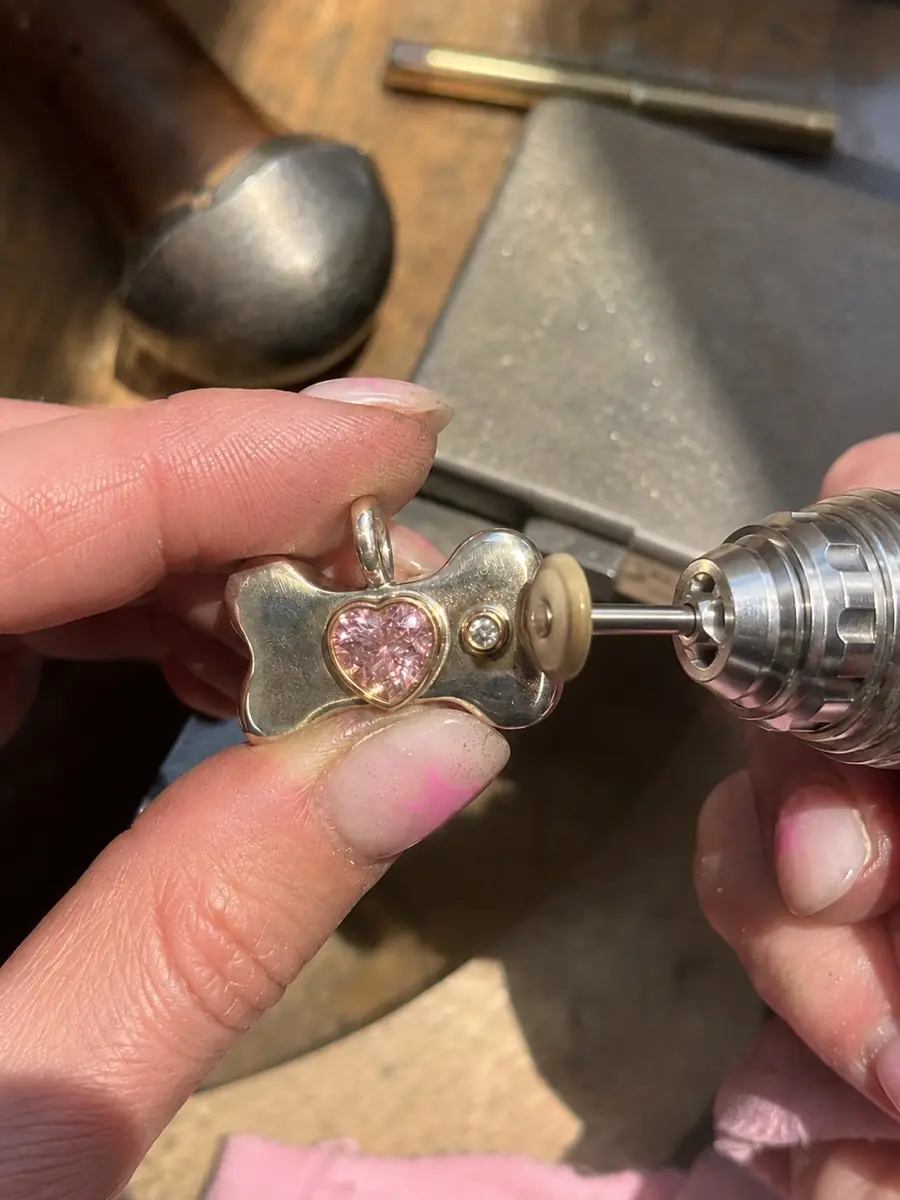
The name is cut into the metal, not printed on top, and it is centred by hand rather than by a template. Deep enough to still read in five years. If we cut it wrong, we remake it.
Cut in, not stamped on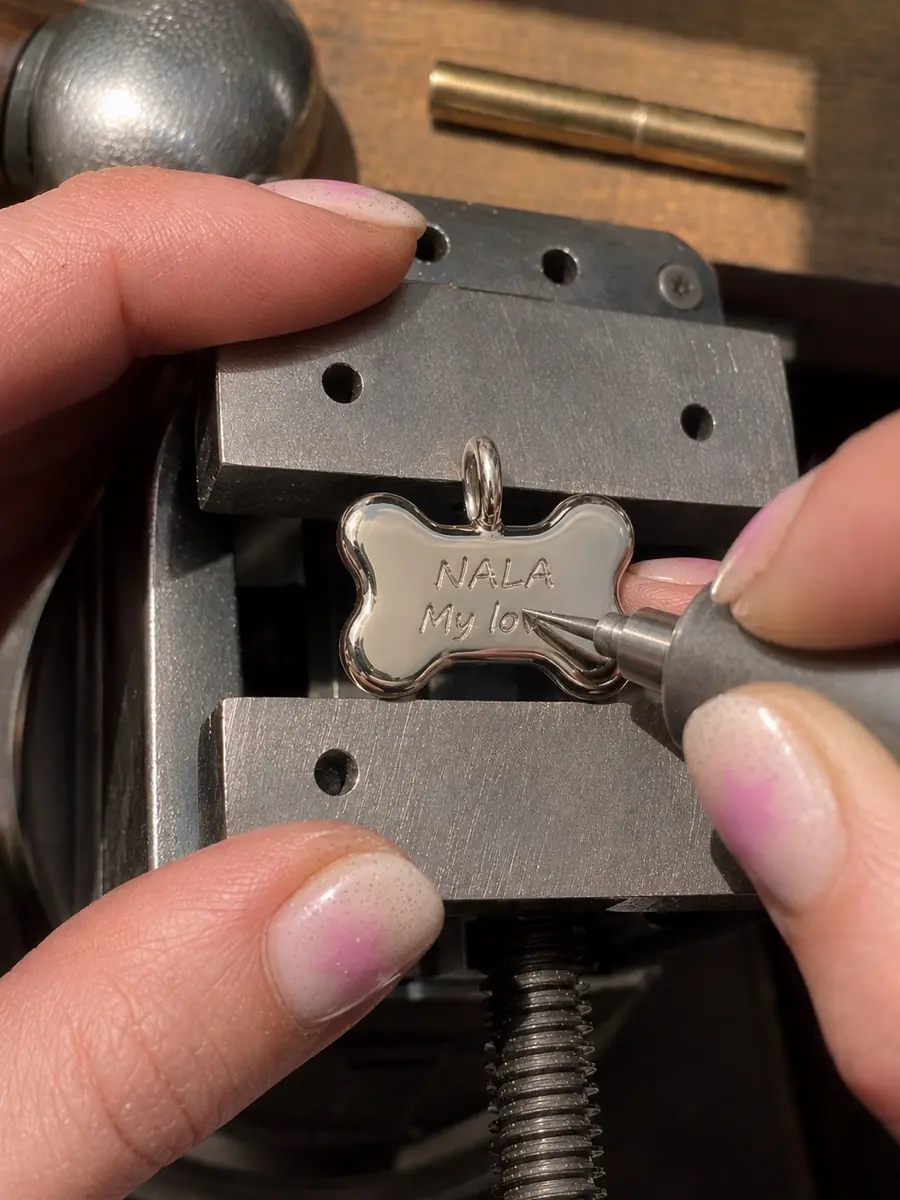
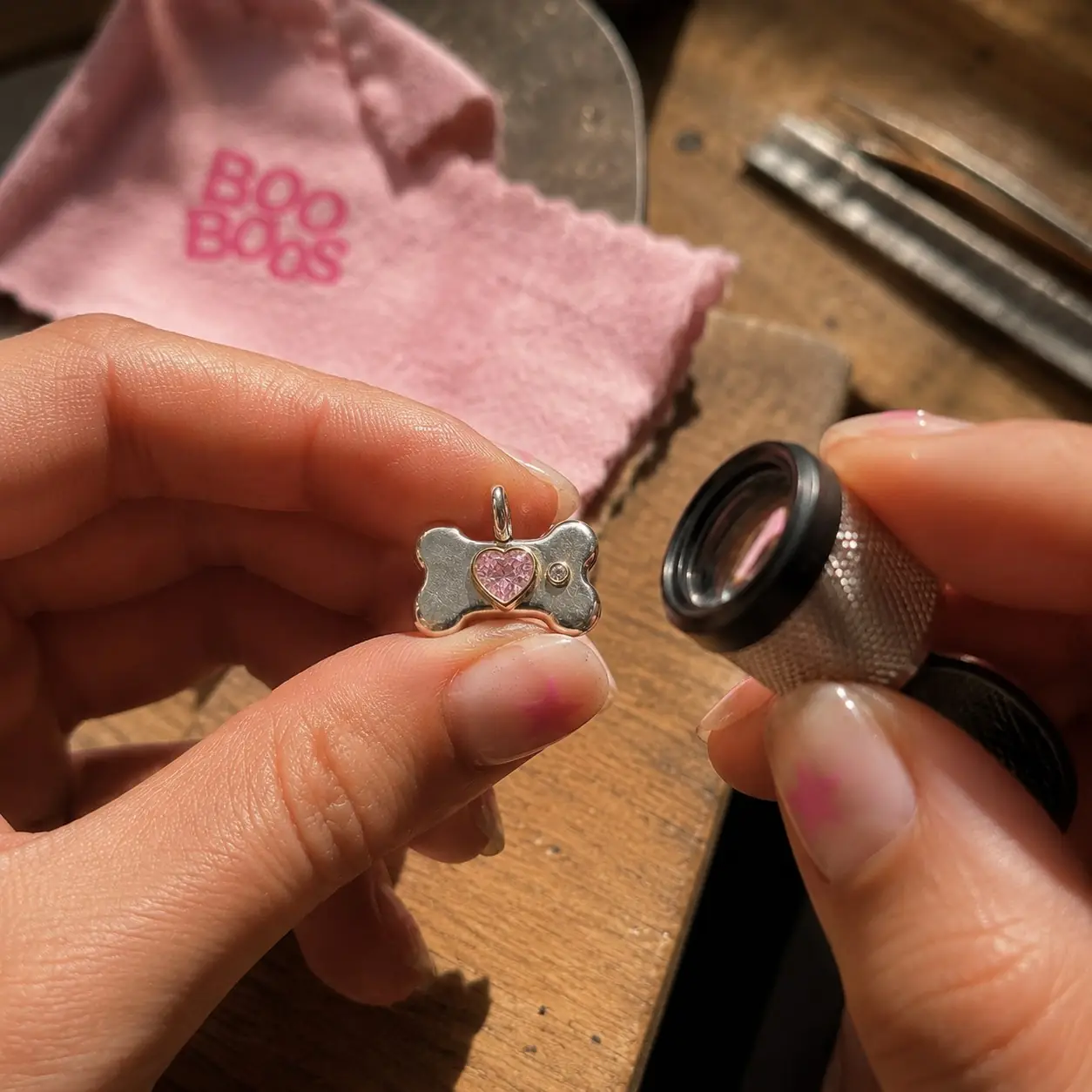
Loupe on the setting, thumb on the edges, name read back against your order. Then it is cleaned, photographed for the record, and packed. No invoice goes in the parcel.
Loupe check before it ships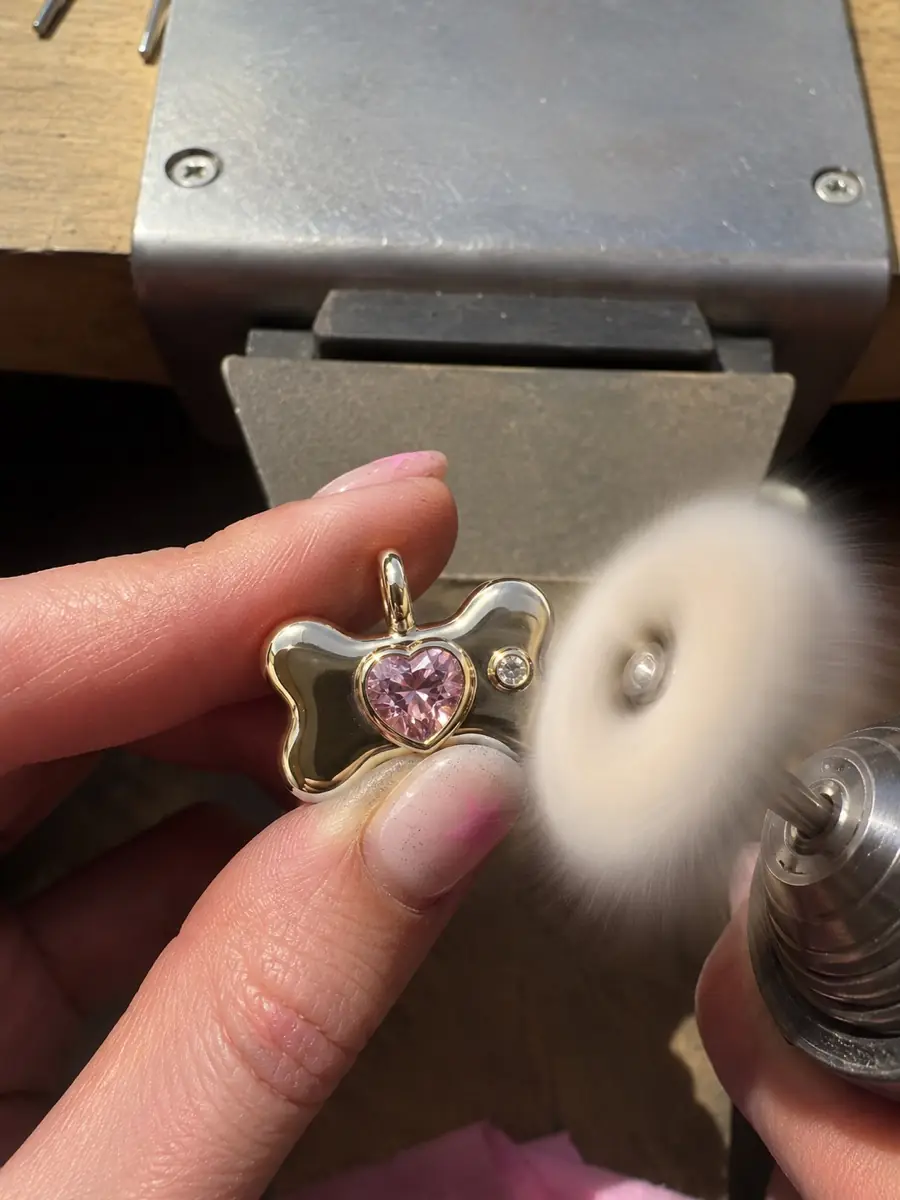
These are made at a jewellery bench in Bangkok, by hand, one at a time. The same pair of hands sets the stone, rounds the edges, checks the loop and cuts the name.